Introduction
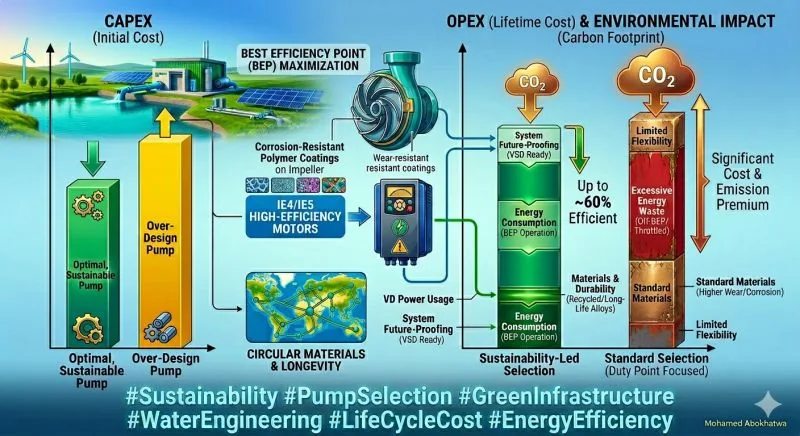
Pump selection is one of the most consequential decisions in water infrastructure design — yet it is frequently made based on capital cost alone. The Life Cycle Cost (LCC) framework reveals a different truth: the initial purchase price of a pump is only about 10–15% of its total life cycle cost. Energy consumption typically accounts for over 80%.
1. Life Cycle Cost: The Real Selection Criterion
| Cost Component | Approximate Share of LCC |
|---|---|
| Initial Purchase Price | 10–15% |
| Energy Consumption (20-year life) | 70–80% |
| Maintenance and Repairs | 10–15% |
| Decommissioning | <5% |
2. Strategic Sizing: Avoiding the Over-Engineering Trap
Over-engineered pumps — sized with excessive safety factors — waste energy when throttled. The consequences include:
- Continuous operation away from BEP, increasing vibration and bearing loads
- Control valve throttling that dissipates useful energy as heat and noise
- Shortened mechanical life compared to a correctly sized unit
Solution: Precise hydraulic system modelling eliminates guesswork. Variable Speed Drives (VSDs) paired with accurately sized pumps eliminate energy-bleeding bypass arrangements.
3. Wire-to-Water Efficiency: The Complete Picture
True efficiency must be measured from power input to hydraulic output — not just motor or pump efficiency in isolation:
- High-Efficiency Motors: IE3 to IE4/IE5 classes dramatically reduce motor losses
- CFD-Optimized Impellers: Modern hydraulic design minimizes internal recirculation
- Advanced Sealing Systems: Reduce internal leakage that bypasses the impeller without doing useful work
4. Future-Proofing Through Design Flexibility
Systems designed with future demand growth in mind avoid premature obsolescence:
- Select pump casings sized for future impeller upgrades
- Design pump stations for staged configuration (additional duty pumps later)
- Ensure pipe diameters can accommodate increased future flows without excessive friction losses