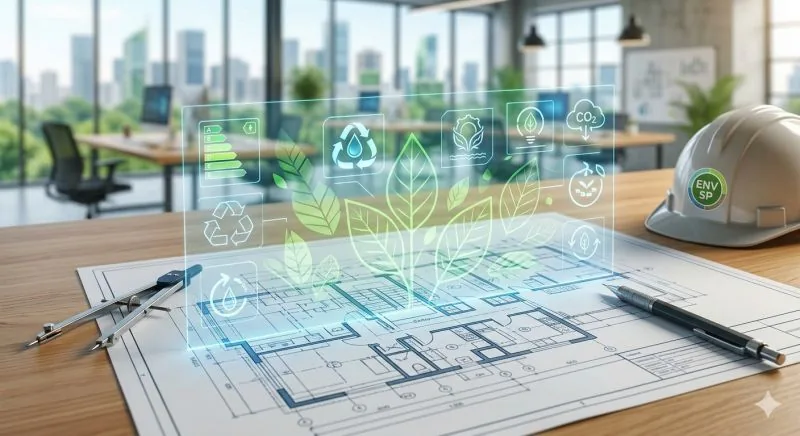
From Strategy to Specification: Integrating Sustainability in Design
Sustainability goals are increasingly prominent in infrastructure project mandates. However, a sustainability commitment stated in a project brief only becomes real when it is reflected in the actual engineering specifications, material selections, and design decisions. The bridge between strategy and specification is coordination — and that coordination must happen early.
The Sustainability Professional's Role in Design
As a technical manager and ENV SP on large-scale water infrastructure projects, I've observed that sustainability integration is most effective when the sustainability professional is embedded in the design process — not reviewing drawings after they are complete.
Key responsibilities include:
- Integrating high-performance metrics into core design: Energy consumption targets, material carbon content limits, and water use efficiency criteria must appear in design specifications and equipment schedules
- Coordinating cross-functional teams: Ensuring hydraulic engineers, structural designers, and M&E consultants are all working toward the same sustainability objectives
- Optimizing resource use: Balancing performance with ecological responsibility — finding solutions that meet project requirements while minimizing environmental footprint
Early Drawing Integration Is Critical
Ensuring sustainability elements are reflected in the early drawings is key to delivering infrastructure that is both functional and future-proof. Once drawings are issued for construction, changing material specifications or system configurations becomes progressively more expensive and disruptive.