Design Life and Reliability Philosophy
Offshore intake structures must be engineered for 30+ year service life with minimal intervention opportunities. Unlike onshore infrastructure, subsea components cannot be easily accessed for maintenance — design decisions made at the engineering stage determine the entire asset life performance.
1. Velocity Management
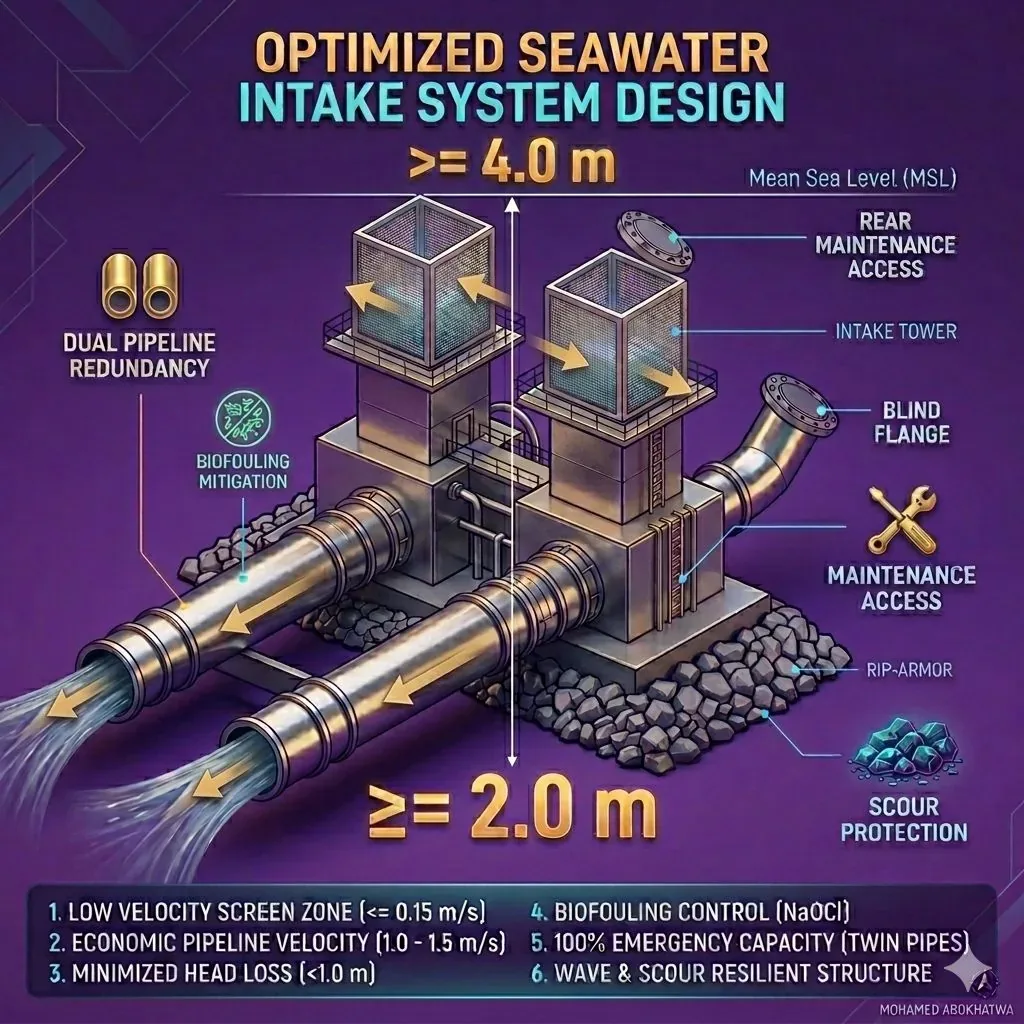
Screen (through-screen) velocity must not exceed 0.15 m/s to minimize impingement and entrainment of marine organisms per environmental screening criteria. Pipeline velocities should be maintained at 1.0–1.5 m/s — sufficient to prevent sediment accumulation while minimizing pipe diameter and associated capital cost.
2. Depth Positioning
Intake heads should be positioned at least 4.0 m below the water surface to avoid the photosynthetic zone where algae and organic matter concentrations peak. A minimum clearance of 2.0 m from the seabed prevents sediment ingestion during storm-driven bottom turbulence events.
3. Biofouling Control
Continuous sodium hypochlorite dosing at 1.0–2.0 mg/L at the offshore intake head maintains pipe and screen condition over the design life. Intermittent shock dosing at 5–10 mg/L addresses established biofilm. All dosing systems require redundant injection points and online monitoring to ensure consistent treatment.
4. Operational Redundancy
Critical SWRO plants require twin intake pipelines, each sized for 100% of design flow. This provides full operational continuity during planned maintenance or emergency isolation of one pipeline — essential for plants supplying municipal water where production interruption is not acceptable.
5. Structural Durability
Rock armor protection for subsea pipelines and intake heads must be sized for 100-year storm return period wave and current forces. Flexible connections at pipe landfalls and structure interfaces accommodate differential settlement and seismic movement without introducing stress concentrations that could lead to fatigue failure.