Sustainability Is No Longer Optional
Sustainability in infrastructure is no longer a "nice to have" — it is a core engineering responsibility. The decisions made during design and construction determine environmental, social, and economic outcomes for decades. Getting sustainability right means engineering it into the project from the earliest concept stage, not appending it as an afterthought.
The Envision Framework: Beyond Compliance
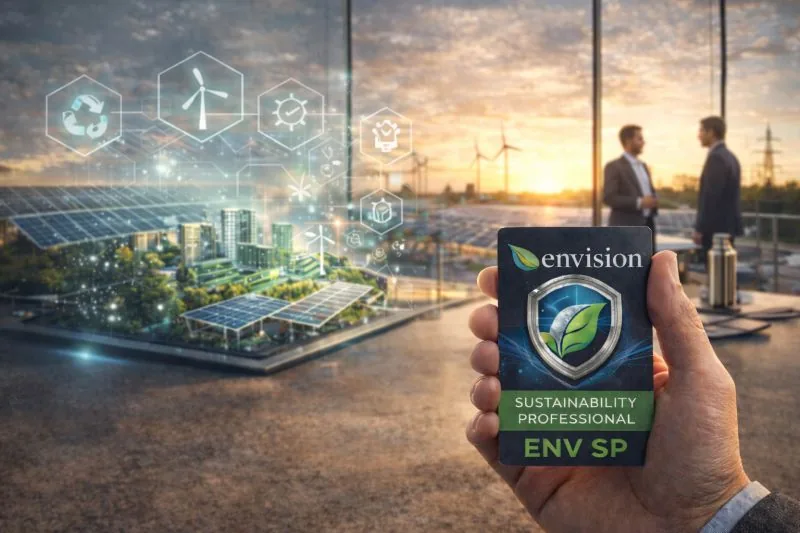
The Envision framework (developed by the Institute for Sustainable Infrastructure) provides a comprehensive methodology for evaluating the sustainability of civil infrastructure. As an ENV SP (Envision Sustainability Professional), I apply this framework to water and infrastructure projects across Saudi Arabia.
Envision goes significantly beyond environmental compliance, focusing on three primary dimensions:
- Resilience: Against climate risks, operational disruptions, and long-term demand changes
- Resource Efficiency: Optimizing energy, water, and material use throughout the project lifecycle
- Community Enhancement: Ensuring infrastructure serves and enhances the communities that depend on it
Practical Application in Water Infrastructure
In water transmission and treatment projects, sustainability considerations that Envision makes explicit include:
- Energy: Pump selection based on life cycle energy cost, not just capital cost; variable speed drives calibrated to actual system curves
- Materials: Pipe material selection accounting for embodied carbon, service life, and end-of-life recyclability
- Water: Minimizing process water losses, designing for leak detection, and planning for future water quality requirements
- Climate Adaptation: Designing for future temperature extremes and changing rainfall patterns in the Saudi climate context