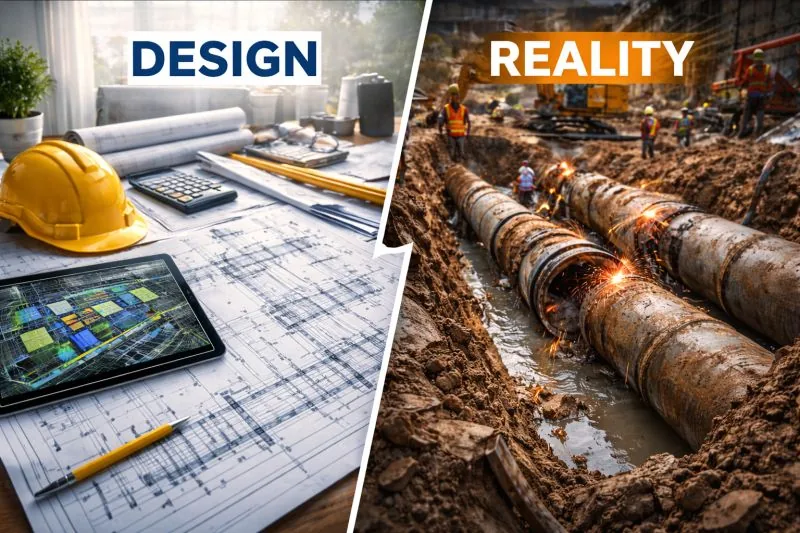
The Biggest Gap in Engineering
The biggest gap in engineering is not technical. It is the gap between design and reality — between what is drawn on paper and what can actually be built and operated in the field.
After two decades of designing and managing water infrastructure projects across Saudi Arabia — including 400 km+ pipeline networks, RO desalination plants, and major pump stations — I have experienced this gap firsthand. And I have seen it cost projects dearly when it is ignored.
What the Gap Looks Like in Practice
Design teams encounter field realities that no drawing captures:
- Space Constraints: Valve chambers designed at 1:100 scale look spacious — at 1:1 reality, they are inaccessible for maintenance
- Unexpected Interferences: Existing utilities, rock formations, and groundwater levels not reflected in survey data
- Execution Limitations: Equipment availability, skilled labor constraints, and sequencing requirements that change the construction methodology
- Time Pressure: Commissioning deadlines that compress testing and verification stages
Bridging the Gap: What Successful Engineers Do Differently
The engineers who consistently deliver — on time, within budget, and with systems that actually work — share common practices:
- Think Beyond the Drawings: Visualize the finished installation before the drawings are complete
- Anticipate Site Challenges Early: Walk the route, study the survey, and challenge every assumption
- Coordinate, Don't Just Design: Work with contractors, suppliers, and operators during design — not after
- Design for Buildability: A "perfect" design that cannot be built is not a success
Execution is the real test of engineering. Technical knowledge alone is not enough. Real engineering leadership means making sound decisions under pressure, with incomplete information, in real time.